How to Perform a Testicular Self-Exam: A Step-by-Step Guide for Early Detection
April is Testicular Cancer Awareness Month, making it an important time to talk about prevention and early detection. Testicular cancer is the most common cancer in males ages 15–35, yet it is also one of the most treatable cancers when identified early.
There is no routine imaging test performed annually for most young men. Instead, awareness and monthly self-exams play a key role in detecting early changes.
A testicular self-exam takes less than two minutes. Knowing what is normal for your body makes it easier to recognize when something is not.
When to Perform a Testicular Self Exam
The ideal time to perform a self-exam is after a warm shower or bath. Heat relaxes the scrotal skin, allowing you to feel underlying structures more clearly.
Choose the same time each month to build consistency. Monthly repetition improves familiarity and confidence.
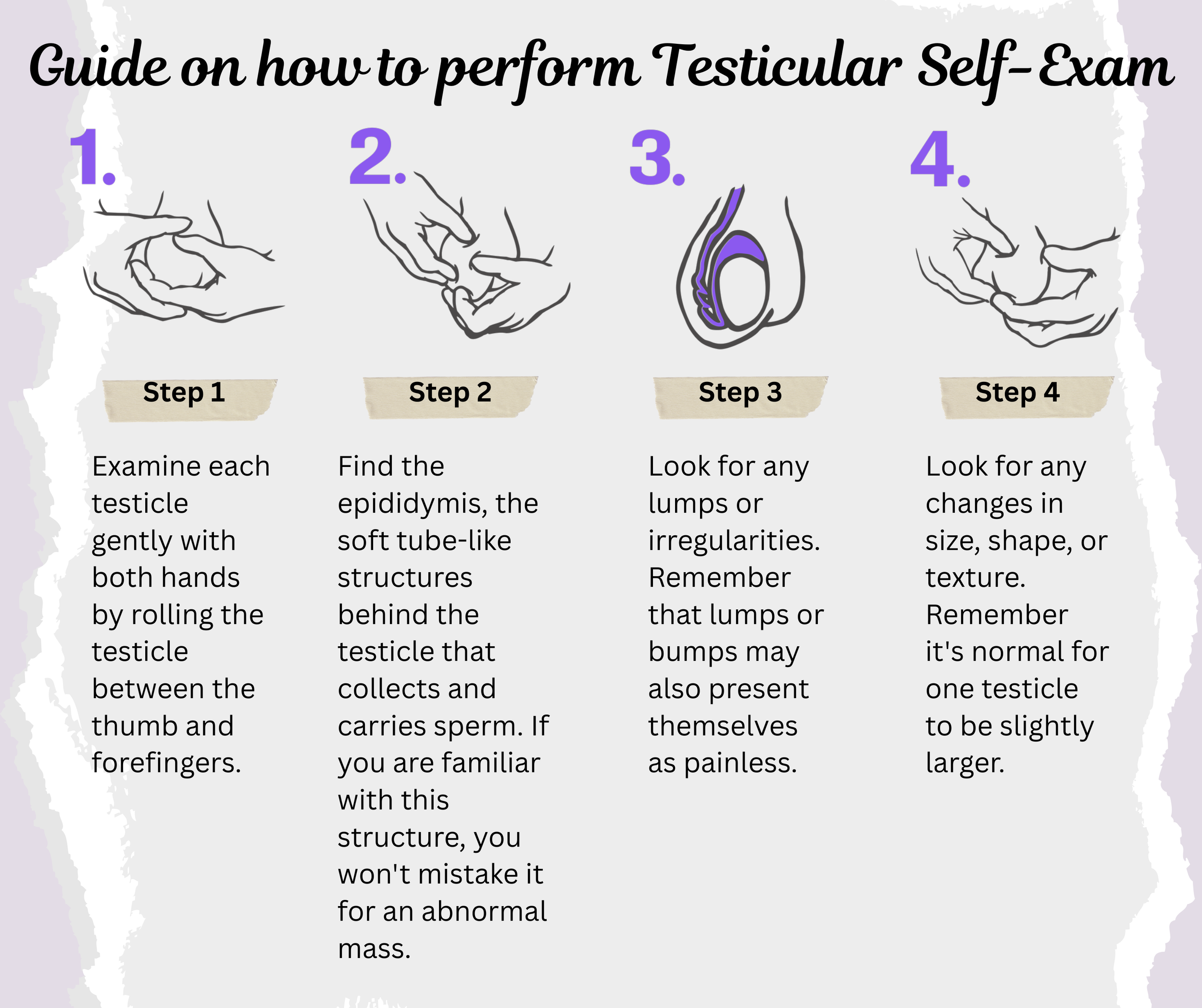
Step-by-Step Guide to a Testicular Self-Exam
Step 1: Visual Inspection
Stand in front of a mirror. Look for visible swelling, enlargement, or changes in skin appearance.
Step 2: Examine One Testicle at a Time
Place your index and middle fingers underneath the testicle and your thumbs on top.
Step 3: Gently Roll the Testicle
Roll it between your fingers using light pressure. You are checking for:
A firm lump or small nodule
Areas of unusual hardness
Changes in size, shape, or consistency
It is normal for one testicle to be slightly larger or hang lower than the other.
Step 4: Locate the Epididymis
At the back of each testicle, you will feel a soft, rope-like structure. This is the epididymis, a normal structure that stores sperm. Becoming familiar with this helps avoid mistaking it for a testicular lump.
Testicular Cancer Symptoms to Watch For
Most testicular changes are not cancer. However, certain symptoms should always be evaluated by a healthcare professional:
A painless testicular lump
Testicular swelling or enlargement
A feeling of heaviness in the scrotum
Dull aching in the groin or lower abdomen
Persistent testicular pain
If you notice any of these potential early signs of testicular cancer, prompt evaluation is important.
When to Schedule an Appointment
Do not wait to see if symptoms resolve on their own. Early detection of testicular cancer significantly improves treatment outcomes, with survival rates exceeding 95% when diagnosed at an early stage.
Early evaluation can include:
Physical evaluation of new testicular lumps or swelling
Physical examination and diagnostic coordination
Ultrasound referral when indicated
Timely specialty referral if needed
If you notice a testicular pain, swelling, or a possible lump schedule a men’s health physical with Culver Primary. Prompt evaluation supports early detection and preventive care.
Take Action This April
Awareness alone is not enough, it must be followed by action. Monthly self-exams are a simple but powerful preventive habit. If something feels abnormal, let our team evaluate it. Early detection makes treatment more effective, less invasive, and provides peace of mind. If you are experiencing symptoms, schedule a men’s health evaluation today, take charge of your health and act early!
Keywords: Men’s health, men’s preventive health screening, testicular cancer awareness, testicular self-exam.